Friday, April 16, 2010

Toyota Highlander FCHV-adv: Travel 431 Miles On A Single Tank of H2.

It’s going be hard for Ford, Cadillac and other SUV manufacturers to tout their 18mpg “Green” vehicles in commercials and in print ads once the Toyota Highlander FCHV-adv hits the roadways. A vehicle that can handle 431 miles on a single 6 kilogram tank of H2. A number equal to 68.3 miles/kg when compared to miles per gallon.

According to AutoblogGreen, “Toyota representatives and others drove two FCHV-advs from Torrance to San Diego and back, a 331.5 mile trip, and then calculated how much H2 was left in the 10,000 psi tank.”


It was also announced by a Toyota representative that the company plans on bringing a durable fuel cell vehicle to market by 2015. That’s not even the best news, there are claims that the vehicle will be priced “shockingly low” for consumers.

Currently tests are still underway in California, which means fuel economy may increase at an even greater rate before Toyota releases their first H2 capable automobiles.

So just remember, when commercials are touting 18 miles per gallon SUV’s their about 4 times behind the fold, not to mention the government calls 18mpg vehicles “Clunkers” in their new “CARS” program.

Microbes galore in seas; "spaghetti" mats Pacific

Alister Doyle, Environment CorrespondentPosted April 2010

OSLO, Apr. 18, 2010 (Reuters) — The ocean depths are home to myriad species of microbes, mostly hard to see but including spaghetti-like bacteria that form whitish mats the size of Greece on the floor of the Pacific, scientists said on Sunday.

The survey, part of a 10-year Census of Marine Life, turned up hosts of unknown microbes, tiny zooplankton, crustaceans, worms, burrowers and larvae, some of them looking like extras in a science fiction movie and underpinning all life in the seas.

"In no other realm of ocean life has the magnitude of Census discovery been as extensive as in the world of microbes," said Mitch Sogin of the Marine Biological Laboratory in Woods Hole, Massachusetts, head of the marine microbe census.

The census estimated there were a mind-boggling "nonillion" -- or 1,000,000,000,000,000,000,000,000,000,000 (30 zeroes) -- individual microbial cells in the oceans, weighing as much as 240 billion African elephants, the biggest land animal.

Getting a better idea of microbes, the "hidden majority" making up 50 to 90 percent of biomass in the seas, will give a benchmark for understanding future shifts in the oceans, perhaps linked to climate change or pollution.

Among the biggest masses of life on the planet are carpets on the seabed formed by giant multi-cellular bacteria that look like thin strands of spaghetti. They feed on hydrogen sulphide in oxygen-starved waters in a band off Peru and Chile.

"Fishermen sometimes can't lift nets from the bottom because they have more bacteria than shrimp," Victor Gallardo, vice chair of the Census Scientific Steering Committee, told Reuters. "We've measured them up to a kilo (2.2 lbs) per square meter."

GHOSTLY MATS

The census said they carpeted an area the size of Greece -- about 130,000 sq km (50,000 sq miles) or the size of the U.S. state of Alabama. Toxic to humans, the bacteria are food for shrimp or worms and so underpin rich Pacific fish stocks.

The bacteria had also been found in oxygen-poor waters off Panama, Ecuador, Namibia and Mexico as well as in "dead zones" under some salmon farms. They were similar to ecosystems on earth that thrived from 2.5 billion to 650 million years ago.

Overall in the oceans, up to a billion microbe species may await identification under the Census, an international 10-year project due for completion in October 2010.

Tiny life was found everywhere, including at thermal vents with temperatures at 150 Celsius (300F) or in rocks 1,626 meters (5,335 ft) below the sea floor. Many creatures lack names or are hard to pronounce like loriciferans, polychaetes or copepods.

One major finding was that rare microbes are often found in samples where they can be outnumbered 10,000 to one by more common species. Isolated microbes may be lying in wait for a change in conditions that could bring a population boom.

Ann Bucklin, head of the Census of Marine Zooplankton that include tiny transparent crustaceans or jellyfish, said the seas were barely studied even by the census.

"Seventy percent of the oceans are deeper than 1,000 meters," Bucklin, of the University of Connecticut, told Reuters. "The deep layer is the source of the hidden diversity."

Paul Snelgrove, of Memorial University in Canada, said one sample in the South Atlantic in an area the size of a small bathroom -- 5.4 square meters -- turned up 700 species of copepod, a type of crustacean, 99 percent of them unfamiliar.

Just finding Latin names for each find will be hard. Scientists had rejected the idea of raising funds by letting people pay to have a marine "bug" named after them.

Thursday, April 15, 2010

Geography of Human Disease: Environment Has Much to Do With Surrounding Pathogens

If your home region has a hot, wet climate and a lot of different kinds of birds and mammals living in it, there's a really good chance the region will also contain numerous kinds of pathogens that cause human diseases.

A new study examining the geography of human disease, led by Dr. Rob Dunn at North Carolina State University alongside an international team of biologists and social scientists, shows that that one can predict the number of kinds of disease-causing pathogens in a region just by knowing its climate or the number of birds and mammals found there. Multiple things, Dunn says, might influence the diversity of pathogens in a region: human population size and density, the amount of time people have lived there or expenditures on disease control. Each of these undoubtedly has some influence, but the environment is dominant.

"We imagine that we have nature under control, but nobody seems to have told nature," Dunn says. "The environment and, in its broadest sense, nature determines the number of kinds of diseases in different regions of the world in much the way that it has influenced the number of kinds of birds, mammals, ants or bees."

But while the environment determines how many diseases one finds in a region, it does not determine how common they are. The researchers also examined the factors correlated to the prevalence, or commonness, of human pathogens across the globe and discovered that the most important factor is health-care spending, specifically expenditures on disease control.

"On the one hand, we are not very effective at altering the numbers of kinds of pathogens present, as those numbers are strongly correlated with environmental conditions. The vagaries of climate and life over which we have little control determine which diseases you are at risk of contracting in any given place," Dunn says. "But on the other hand, we can control the prevalence of pathogens by spending money on disease-control efforts. It is that prevalence that influences human health and well-being."

A paper describing the research appears online in Proceedings of the Royal Society of London: B, a leading peer-reviewed biology journal.

The study examined a host of factors thought to be involved in the global distribution of disease-carrying organisms. Climate and geographic variables, population data, disease-control data, pathogen data and human history data were all factored into statistical models that attempted to show which factors had stronger correlations to disease.

Geographic regions with lots of different kinds of birds and mammals are correlated with the presence of lots of pathogens. The most likely explanation for this relationship is simply that the same environmental factors have influenced patterns in diversity of human pathogens that have patterns in the diversity of the rest of life, including the birds and mammals. Reducing bird and mammal diversity will not remove the diseases, Dunn asserts. In fact, making wild birds and mammals more rare seems likely to increase the diversity of human diseases, with diseases on rare mammals and birds all too eager to jump from their sinking ships.

But all is not lost if you live in hotter and wetter climes with lots of birds and mammals around. Dunn points to life in the United States as one example. Malaria is present but is rare and relatively insignificant because of the country's historic effort at controlling disease. In short, the United States has a large number of different kinds of pathogens, Dunn says, but pathogen prevalence is low because of a strong history of disease-control and health-care spending.

The researchers also suggest ways to optimize future spending. In particular, places where current spending is low and populations are large are likely to be places where the most people will be saved by additional efforts -- notably India, Pakistan and East African nations along the equator. "Current health-care spending is quite low, prevalence of pathogens is quite high, and human populations are large in these areas, so it makes sense to target efforts there," Dunn says.

Wednesday, April 14, 2010

Roll-up for the world’s largest mangrove planting project

Roll-up for the world’s largest mangrove planting project
Seeds of conservation success in Sandicoly, Senegal

Written by Tim

"Become a superhero, plant your mangrove today”, declared the poster.

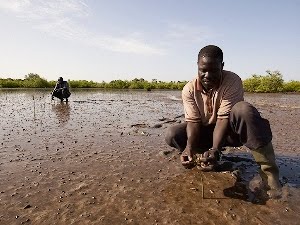
Eager to enter the pantheon of mangrove superheroes we headed to the Saloum Delta in Senegal where the world’s largest ever mangrove planting project is underway. Organised by local NGO, Oceanium, almost 30 million mangroves have been planted since June.

The mangrove itself is a hero among flora. It provides firewood for cooking and smoking fish, branches for tortoise-shaped village rooftops, and breeding grounds for countless species of fish, including oysters that cling stubbornly to the mangroves’ spider-like roots.

Abdoulaye Diouf, Chef de Zone in Sandicoly, tells us that the fishermen had noticed a decline in the number of fish in recent years. This was attributed to over-fishing and a decline in mangrove coverage caused by unseasonal heavy rains.

As well as replenishing depleted mangrove stocks, Jean Goepp, Oceanium’s Project Coordinator, says that the project teaches people to conserve their resources. “People must re-plant their common resources, not just their gardens”, he says. Mr Diouf says the village is now aware that it must use all its resources sustainably – sea, forest and mangroves.

The mangroves were chosen as the resource to launch this behaviour-changing initiative because once planted they require no human input. Occupying the swampy inter-tidal zone they require no watering and are naturally protected from bush fires and hungry cattle.

80,000 people have been involved in the project, planting and collecting seedlings from the flowering mangrove trees for which they are paid 1,000 CFA (about £1.50) per sack. Oceanium provides a financial incentive to the community as well.

Planting is simple. You create a hole in the wet inter-tidal sand with an extended index finger and plug it with a seedling. Superhero status is easily attained.

In Sandicoly, the project has been accompanied by footballing success and the village is through to the regional cup final. They plan to use the mangrove money to take their supporters to the match. It will be ice creams all round as m

Solar Powered Air Conditioners Coming To US Homes (Soon!)

Solar Powered Air Conditioners Coming To US Homes (Soon!)

Even though we are nearing the end of Summer, in many cities and states heat is still bearing down at full throttle.

And most homes in the US use air conditioners to cool off. In fact, most Americans use air conditioners to the tune of 16% of the total energy in the US. So obviously this is a huge market in the HVAC niche, which environmentalists and green minded entrepreneurs are rushing off to make more eco friendly. I don’t foresee anytime soon a plethora of middle Americans dumping their A/C, as this has been the norm for too long and most don’t know what to replace their A/C with. But there is growing awareness of the need to use less energy and to at least try energy-efficient cooling systems, and Americans are starting to seriously pay attention to this big energy hog.

However there is good news. A company named ChromaSun is making strides in this area and has a prototype in the works to bring a highly efficient earth-friendly air conditioner to US homes.

Their first revolutionary product is a Solar Powered Air Conditioner. This 10 foot long by 4 foot wide box (for lack of a better word) would cost about $15.52 a kilowatt hour to operate compared to $27.69 for an electrical air conditioner. And would cool off an average 1,500 square foot room with ease, according to ChromaSun. As the name suggests, the a/c would be powered by the Sun. The light from the sun would be converted to heat, which would then be converted to electricity. So you could potentially (very soon) cool off your home entirely off-grid. Or mostly off-grid anyway.

The cost has not yet been determined, nor a release date set on this solar-powered air conditioner, but keep an eye on ChromaSun—as they have a pulse on this massive and exciting industry.

Measuring Global Water Vapor and Formaldehyde

ScienceDaily (Apr. 14, 2010) — Atmospheric water vapour (H2O) is the most important natural greenhouse gas, accounting for about two-thirds of the natural greenhouse effect. Despite this importance, its role in climate and its reaction to climate change are still difficult to assess.

Many details of the hydrological cycle are poorly understood, such as the process of cloud formation and the transport and release of latent heat contained in the water vapour. In contrast to other important greenhouse gases like carbon dioxide (CO2) and methane, water vapour has a much higher temporal and spatial variability.

Global monitoring of H2O by Metop-A -- Europe’s first polar-orbiting meteorological satellite -- is therefore a key to understanding its impact on climate.

Formaldehyde (HCHO) is one of the most abundant hydrocarbons in the atmosphere and is an important indicator of so-called non-methane volatile organic compound (NMVOC) emissions and photochemical activity. As such, it is an indicator of the presence of volatile organic compounds in the atmosphere, which in turn play an important role in the formation of toxic ozone close to the surface and also have an important influence on climate through the formation of large aerosol particles. HCHO is a primary emission product from biomass burning and fossil fuel combustion, but its principle source in the atmosphere is the photochemical oxidation of methane and non-methane hydrocarbons. Metop-A measurements of HCHO can be used to constrain NMVOC emissions in current state-of-the-art chemical transport models used in the forecasting and analysis of pollution events and also in modelling climate change.

Operational GOME-2 H2O and HCHO data are being produced by the Deutsches Zentrum für Luft- und Raumfahrt (DLR), the German Aerospace Center, a partner of EUMETSAT's Ozone and Atmospheric Chemistry Monitoring SAF (O3M-SAF) coordinated by the Finnish Meteorological Institute. The H2O and HCHO retrieval algorithms for GOME-2 have been developed by the Max Planck Institute for Chemistry in Mainz, Germany, and the Belgian Institute for Space Aeronomy (BIRA/IASB) in Brussels, respectively.

GOME-2 H2O and HCHO as well as other operational products can be ordered via the O3M-SAF site. DLR provides near-real-time and historical maps of GOME-2 total column (ozone, nitrogen dioxide, tropospheric nitrogen dioxide, bromine oxide, sulphur dioxide, H2O, HCHO) and cloud products.

Tuesday, April 13, 2010

Dust, vanishing greenery threaten Taj


Agra: The Taj Mahal and other heritage monuments in and around Agra are facing a major threat from dust-laden air. Unabated construction is making the city's green cover disappear and drying up water bodies, adding to the dust levels.

"The collision (of the dust with the marble) results in micro-scratches that retain moisture which attracts pollutants and gaseous substances," said PC Gupta, head of the Archaeological Survey of India's (ASI) chemical department.

The dry westerlies from the Rajasthan desert are sand-blasting the white marble mausoleum and the first question in the minds of many tourists visiting the Taj is whether it is turning yellow?

The suspended particulate matter (SPM) level in the ambient air around the Taj Mahal is over 350 micrograms per cubic metre, much above the permissible standard of 100. In the city and around other monuments, it could be much higher, Gupta told a news agency.

The chief reasons are the rapid increase in vehicular movement, lack of water in Yamuna river and poor afforestation on the western periphery of the city, he said.

Surendra Sharma, president of Braj Mandal Heritage Conservation Society, questioned the success and validity of a whole lot of exercises undertaken to bring down the air pollution level when the SPM and dust levels have not come down.

The abnormally high temperature in March and April have dried up all water sources and the dust storms have raised the SPM level to a new high.

Mughal emperor Akbar's abandoned capital at Fatehpur Sikri is equally threatened by illegal mining activity all around and lack of water to green the surroundings.

No government department has any idea or plan to remove the garbage dumps that have come up on 80 acres of the incomplete Taj Heritage corridor - work on which was ordered to be stopped by the Supreme Court in 2003 - between the Taj and the Agra Fort.

"The Supreme Court has done justice by staying the development of corridor at the site. However, the unfinished project is actually causing lots of environmental problems," said Ritesh K Sharma, an activist of rights group LegalMitra.

Central Pollution Control Board (CPCB) officials have said repeatedly that the dust level in the whole Taj trapezium cannot come down until there is massive tree plantation all around and water in the river Yamuna round the year. The ASI last year sent a proposal for a barrage on the river but no action has been taken.

Despite crores of rupees spent over the past 15 years, the Yamuna behind the Taj is still dry. Urging efforts to save the river, Mughal historian R Nath said: "The water in the river will absorb all the pollution and dust and also strengthen the base of the massive structure."

Stretches of green cover along the Western periphery of the city and the southern side have vanished to make way for residential colonies. Community ponds have also disappeared and there is no trace of the dozen-odd Mughal gardens and with only their names like Bagh Farzana, Begum Samru Ka Bagh, Bagh Muzaffar Khan and so on surviving.

Road building activity all around the Delhi-Kolkata national highway, the Jaipur-Agra highway, and now the Jaypee group's most ambitious expressway connecting Greater Noida to Agra along the river bank have also taken a heavy toll on trees and greenery.

The new townships proposed to be built by the expressway authority all the way from Noida to Agra will further deplete the green resources.

"They are spending tonnes of money on questionable projects within the city in preparation for the Commonwealth Games, but the general maintenance of the monuments and the surroundings has remained miserably poor," conservationist Ravi Singh told a news agency.

"Encroachments have not been removed and conservation work has not been taken up to facelift the historical monuments that dot the city. The focus is too Taj-centric."

Don’t underestimate the value of hot water

Don’t underestimate the value of hot water


Electric water boilers are rapidly growing in popularity. Primarily because these nifty appliances prove that green gadgets can be better not only to the environment and to your wallet, but also to your lifestyle.

Heating water with an electric water boiler is faster and more energy efficient than using your electric or gas stove. This is because the heating coil is suspended in the water you’re trying to heat. So, there isn’t a loss of energy into the surrounding air. Also because the heating coil is submerged, the coils energy is extracted into the water more completely, whereas an electric stove’s coil has to cool down after removing the water.

Because an electric water boiler is more efficient, it is also faster. Making a pot of tea takes nearly half the time. If you are cooking with boiling water, you can heat the water in your electric boiler before adding it to the stove. An electric boiler is also a great solution for a dorm room or office break room that lacks a stove, which the millions who depend on ramen noodles can appreciate.

If you need water which is only warm, it is safer to use cold tap water and then heat it up in your electric water boiler. This is because warm water in your plumbing is a perfect environment for bacteria. While this bacteria is okay for showering and washing your hands (because you are also using soap) it is bad for young and old people as well as house pets and plants.

Electric Water Boilers are sold anywhere you can find other household appliances and start at about $10. Some more advanced models even allow you to control the exact temperature, which any baker out there will love

Save Water | Live Earth

Save Water | Live Earth

Posted using ShareThis

Why should we plant trees?

ABOUT PLANTING TREES

Why should we plant trees?

* It is said that it takes 16 trees to supply the oxygen for one person's life. We each owe the earth 16 trees
* Planting trees now will ensure that our children have oxygen in future
* Trees balance out the negative effects of global warming as trees are the best sponges of carbon dioxide
* Trees bring more rain, so we will be ensuring we will have water for future generations
* Indigenous trees and shrubs bring balance to the environment
* Children will have fruit to eat


What should I plant?

* Fruit trees
* Indigenous trees which benefit local ecology (you can plant seeds, seedlings, saplings or plugs - every seeds counts)
* Indigenous shrubs
* Medicinal plants


Where should I plant?
In your garden at home, at schools, wastelands, farm boundaries, along the river banks, hills, roadsides, playground boundaries, public places, coal mines, military areas, universities and educational institutions, government office premises, municipal areas, government lands, industrial areas, places where there are high levels of pollution, etc. (Note: when planting, always seek the permission and support of local government, schools, business, and the respective landowners.)

How do I plant a tree?

* Dig a square hole, half a metre wide by half a metre wide. Keep the dark top soil separate from the lighter soil beneath it. Put the topsoil in the bottom of the hole.
* Remove the plastic bag and placed the tree upright in the hole, so that the base of the tree is just below the ground level.
* Next to the tree's roots, plant a type of pipe at an angle (or use a 2 litre plastic cool drink bottle, cut holes in the bottom of the bottle). The top of the pipe or cool drink bottle must stick out of the ground.
* Mix a small amount of compost or kraal manure with the left over lighter soil, and pack it firmly in the hole.
* Measure one spade length in distance around the tree. In this area, remove all grass and weeds.
* Water the tree and add 10cm layer of mulch (leaves, straw, or strips of newspaper). The mulch must not touch the tree.
* Fill the pipe with water once a week. This prevents wastage by sending water straight to the roots of the tree. Once you have watered the tree, put the lid on the bottle, to prevent evaporation.
* After the first year, water the tree only when the soil is dry.
* Place a wooden stake/ solid stick next to the tree, and tie it loosely to the trees trunk with soft material, such as a stocking to help the tree grow straight.
* Seedlings can be planted in polythene bags, and replanted when sprouting or donated to schools, townships or the Department of Forestry.


How do I take care of my tree?
Adopt a tree! Nurturing your tree is as important as planting. Take care of the saplings and trees as you would a child, for years to come, until it is strong, blossoming and bearing.

Take care of seedlings for at least three months, until they are ready for planting in the ground. Aftercare should entail proper watch, ward and watering for at least five years.

Where do I get seeds/saplings/seedlings, plugs, trees from?
You can get seeds and saplings from government departments like the Department of Water Affairs and Forestry, or visit your local nursery and ask advice on what is suitable to plant.

Monday, April 12, 2010

Emirates Environmental Group - Recycling Facilities

HSBC, a long time supporter of EEG, has once again come on board to give a boost to our Waste Management Programs based on the principle of “Reduce, Reuse and Recycle”.

EEG has installed, in about 18 schools in the UAE, HSBC-sponsored recycling centers. These centers are a group of three large metal cages and are specifically meant for recyclables such as paper, plastics and aluminum cans.

HSBC-Sponsored Recycling Centers

Once the recycling center is full, school authorities can notify the EEG who sends its volunteers to empty out the same. EEG coordinates with its partner collection companies to transport the waste for recycling.

The HSBC-sponsored recycling centers from EEG inculcate in students a sense of responsibility towards the environment. They also teach students the importance of segregating wastes. HSBC and EEG, together, provide a unique platform to students and schools who want to help the environment in their own little way.

.............................................................................................................................................

For the past decade experts and organizations have been preaching the benefits of recycling, but unfortunately none had managed to put together a practical and convenient method to implement recycling. Therefore for a very long time this waste management tool remained confined to the realm of theory and preaching, but did not translate into actual and habitual practice.

The Emirates Environmental Group, in its continuous quest for an innovative way to combat the problem of solid wastes and establish waste management solutions, introduced a modest can collection programme in local schools in 1992. Initially very few schools responded and joined in this campaign but as the years passed by, this initiative came to attract not only academic institutions but also private and government organizations. The response to this pilot project inspired the Group to open doors for new ideas to include the collection of waste paper, used toner and ink cartridges, for recycling purposes. Through the implementation of these recycling projects, EEG has gained a reputation for its effective, efficient and most importantly sincere initiative to help the government and the private sectors to sensitize the community about the fragility of the earth and the need for appropriate environmental action to preserve its irreplaceable resources.


As we expand from one activity to another, the results and feedback that we get from the participants of these campaigns amply demonstrates that people are willing and able to contribute to recycling initiatives provided they are given the right information, facilities and incentives. The recycling centre project was conceptualized with this lesson in mind.

The aims and objectives of this project are as follows:

* To reduce, reuse, segregate and recycle wastes to minimize the quantity sent to landfills and prevent land, water and air pollution.
* To contain depletion of natural resources, promote water and energy conservation, and facilitate material recovery from waste streams.
* To offer an aesthetically pleasing and effective one-spot collection centre for voluminous assorted wastes, for the use of the entire community.
* To influence social and environmental behavior of the community and promote an environment conscious culture among them.
* To complement the waste management efforts of the local authorities.
* To formally announce the successful implementation of the first phase of the project a press conference was organized by EEG. The conference was hosted by The Fairmont Hotel on March 31st, 2003, which was well attended, by the government and public sectors as well as the educational institutions.

In 2001, EEG started to place Recycling Centres in deserving private schools that were active in recycling campaigns, as well as government schools to support and motivate them. The schools were chosen as the ideal place to start with, as the problem of waste management can be successfully addressed when started at the base level of the community, with the youth as the primary target.


Recycling Center Stats
Sl No. Emirate Recycling centers
1 Dubai 115
2 Sharjah 31
3 Abu Dhabi 21
4 Al Ain 11
5 Ras Al Khaimah 5
6 Ajman 4
7 Fujairah 4
8 Umm Al Quwain 2

Total 193


Usually, the most difficult part of making a recycling project work is getting wastes segregated, which must be done at the source. This requires a lot of effort, will power and coordination from individuals, who are used to the habit of casually dumping their assorted waste all together in one place. The Recycling Centres offer the opportunity to collect large volumes of segregated wastes without impinging on space or aesthetics. It was pointed out that recycling offers an ideal solution to our growing solid waste problem.

The country has the necessary facilities for recycling different products but the challenge lies in how these recyclable materials can be reached to the concerned companies. This is the main role of EEG, to serve as an intermediary between the different concerned parties.

Sunday, April 11, 2010

Vital Role for Bacteria in Climate-Change Gas Cycle

Isoprene is a Jekyll-and-Hyde gas that is capable of both warming and cooling the Earth depending on the prevailing conditions. It is an important industrial gas, necessary for the manufacture of important compounds such as rubber and vitamins, but very little is known about how isoprene is cycled in the environment.

At the Society for General Microbiology's spring meeting in Edinburgh, Dr Terry McGenity revealed the identity of some crucial players in the gas cycle; isoprene-degrading bacteria that are able to intercept the release of isoprene into the atmosphere.

After being released by plants and algae, isoprene reacts with molecules in the atmosphere to produce ozone. It can also prolong the lifetime of methane in the air. Both ozone and methane are potent greenhouse gases that lead to global warming. Conversely, in certain conditions, isoprene can undergo chemical reactions to form aerosols that can increase cloud cover leading to cooling of the Earth.

Together with colleagues at the University of Essex, Dr McGenity discovered that that there are numerous types of bacteria able to consume isoprene before it even enters the atmosphere. These bacteria were found concentrated around coastal zones that are known to be hot spots of marine isoprene production by algae.

"The discovery will improve models that help us to predict how climate change and other environmental factors affect isoprene flux and vice versa," said Dr McGenity. "Until now modelling the overall flow of isoprene from the sea to the atmosphere has been hampered by inadequate understanding of the main producers and consumers," he explained.

Interestingly, many of the isoprene-degrading bacteria can also break down alkanes (a major component of crude oil). "This suggests that algal-derived isoprene may help important oil-degrading microbes to survive between spills," explained Dr McGenity.

An understanding of how isoprene is naturally cycled in the environment could have important applications across different industries. "Currently the chemical industry relies on isoprene derived from crude oil as a building block for the manufacture of compounds like vitamins and rubber, whereas algae could potentially provide a sustainable supply of isoprene for these uses." suggested Dr McGenity. "Equally, studying the enzymes involved in bacterial isoprene metabolism may lead to applications in the synthesis of important pharmaceuticals," he said.

Friday, April 9, 2010

Sustain Your Sustainable Landscape With Mulch

Proper landscaping is as important to energy and water efficiency in a home as anything else. And eco-friendly mulch is the easiest way to keep that landscape healthy. Using mulch in flower beds, around sidewalks, and around trees is great for controlling erosion, keeping in the moisture, and making your plants look fabulous.

These days shredded tires, peanut shells, and pine bark and other recycled materials are all being used for sustainable landscaping projects instead of the traditional composition. Of course, your environmental footprint will most likely be greater in the long run if you have to buy an eco-friendly mulch that’s been shipped halfway around the world, but there are easy ways to create mulch with your own recycled materials.

Old newspapers make great mulch. Just shred them into small strips and spread the strips around your flower bed. Due to their tendency to clump when wet, however, its often recommended to apply them as a bottom layer, and then add different mulch on top. They will biodegrade over time and add nutrients to the soil.

Peanut shells, if you have enough of them, also work. They make a great mulch due to their chemical composition. You can mix them with leaves or compost to make a nice-looking finish. However, according to gardeners, they’re not good food for worms and therefore the natural nutrient cycling is not as effective. What’s more, there is often a risk of mold accumulation with peanut shells that can spread to your plants and harm them. Therefore, nut shells are not necessarily the best bet for your mulch, but they definitely work.

rubWhat about recycled rubber? Old tires are filling up landfills across the US—what better way to give them new purpose than to add them to your home’s landscaping? You can buy preshredded rubber at your nearest garden center or you can make it yourself. It is insect-resistant and aesthetically appealing. Rubber mulch applications are particularly common on playgrounds, but they are just as good for your sophisticated landscape bedding.

Pine bark and pine needles are the best tree materials for mulch. They have a high moisture retaining capacity and keep away insects. The substances’ high acidity contributes well to plants that require increased acid in the soil. Pine bark also retains its color longer than most other tree barks, meaning that it needs to be replaced less often.

While pine makes a great mulch, other tree products that have the same characteristics might be slightly more sustainable. Eucalyptis, for example, grows rapidly like bamboo and is highly abundant, allowing it to be harvested and regenerated in a more predictable manner than pine. But remember, it is usually more sustainable and simple to use whatever product grows nearest you.

Unfortunately, however, mulch can never beat the advantages of the compost pile. You can create a compost bin with food waste and yard clippings, then spread it throughout your flower beds. This is by far the most nutrient-enhancing mulch option for plants.

When in doubt, you can mix together most organic substances to create a fine looking and eco-friendly mulch.

Thursday, April 8, 2010

Flights Over Arctic Provide Data for Investigating Ozone Hole Depletion

An international team of researchers is investigating ozone depletion in the polar stratosphere using data gathered during flights over the Arctic region at elevations of up to 20 kilometers.

he team of atmosphere researchers -- among them Stephan Borrmann, Professor at the Institute of Atmospheric Physics of Johannes Gutenberg University Mainz and one of the directors of the Max Planck Institute of Chemistry in Mainz -- hopes to discover how long the processes that result in the formation of the hibernal holes in the ozone layer at the polar caps actually take. It is also expected that the data collected during the flights undertaken with the high-altitude aircraft "M55 Geophysica" will provide insight into what effect climate change is having on the physical and chemical processes that influence the ozone layer. This would make it possible to extrapolate the future development of the ozone layer under the conditions obtained during on-going changes.

The chlorofluorocarbons (CFCs) released by humans on the surface of the earth are gradually transported into the stratosphere. Here the CFCs are exposed to powerful ultraviolet radiation which decomposes the chlorofluorocarbons to finally release chlorine. This chlorine usually reacts with other chemicals and is bound in substances such as hydrogen chloride vapor and chlorine nitrate, which are not detrimental to ozone. However, in the stratospheric clouds located over the poles, the clorine from CFCs can form aggressive ozone-destroying chlorine monoxide radicals (CIO).

Analysis of these clouds is thus essential to the research being conducted by the Mainz team under Stephan Borrmann. And it is these extraordinary but natural clouds that are formed only in the stratosphere over the Arctic and Antarctic regions during the cold of the polar winters that are implicated in the formation of the holes in the ozone layer.

"As the warming of the atmosphere attributable to climate change also has a direct effect on the physical and chemical processes associated with the ozone layer, we urgently need to conduct new research into this aspect," explains Professor Borrmann.

The scientists are able to directly analyze the properties of the particles making up these polar stratospheric clouds -- frozen droplets of ice and nitric acid with an approximate diameter of 3-20 micrometers -- using instruments attached to the aircraft. In order to be able to determine the rate and extent of ozone depletion, the scientists need to find out exactly what size these droplets are and how many of them are present in these polar stratospheric clouds (PSCs). The Mainz team is using additional instruments to evaluate the characteristics of ultrafine airborne aerosol particles that are also present in the stratosphere and play a role in the relevant processes.

Remarkably, the presence of meteoric dust was even detected in the stratosphere during the data-gathering flights conducted between mid-January and mid-March 2010. It has also proved possible to collect significant amounts of data directly from PSCs. "We were amazed to discover that there were surprisingly large particles present in polar stratospheric clouds. These has a diameter of up to 30 micrometers, and they were rapidly precipitated thanks to their weight. This causes the substances contained in them to be irreversibly removed from the stratosphere, thus promoting the process of ozone depletion," Borrmann explains.

Originally a Russian spy plane, M55 Geophysica is one of only three aircraft worldwide that are able to reach the stratosphere -- and it can do this while carrying a payload of nearly one ton of metering instruments and other equipment. Such flights are the only way in which the atmospheric researchers can collect the information they still need to understand the correlations between ozone depletion and climate change.

Researchers from nine countries are taking part in the measuring flights, which start from Kiruna, located in the Arctic Circle in northern Sweden. The campaign is part of the EU project "RECONCILE" (reconciliation of essential parameters for an enhanced predictability of arctic stratospheric ozone loss and its climate interactions) that is being coordinated by scientists of the Jülich Research Center.


Story Source:

Adapted from materials provided by Universitaet Mainz.

Wednesday, April 7, 2010

Northwest Lava Flows Could Have Altered Earth’s Climate, Wiped out Species, New Evidence Suggests

(Apr. 7, 2010) — New research suggests the volcanic birth of the Northwest's Columbia Plateau happened much more quickly than previously thought and with an intensity that may have changed the earth's climate and caused some plants and animals to go extinct.


"What you're looking at are lava flows that repeat fairly quickly," said Steve Reidel, research professor of geology at Washington State University Tri-Cities. "Not decades or centuries, but months or years."

Reidel is a co-author of a paper in the recent issue of the journal Lithos refining the time frame of the Grande Ronde lava flows, which produced enough molten basalt to sink the earth's crust and created the vast Columbia River Plateau of Washington, Oregon and Idaho.

Just one of the 100 or so lava flows would have blanketed much of Washington State in 10,000 cubic kilometers of lava -- 10,000 times the volume of ash produced by the 1980 eruption of Mount St. Helens.

The flows moved at walking speed, enough time for the horses and other animals of the region to get out of their path. But a single flow could reach as far as Portland, be more than 2,000 degrees Fahrebheit and take half a century to cool. In the process, it would have generated monsoons across the Northwest and emitted enough heat and sulfur to alter the earth's climate, said Reidel.

Substantial evidence has implicated other lava flows in the extinction of species. Siberian flows coincided with the epic Permian-Triassic "mass dying" that wiped out 96 percent of the earth's marine species 250 million years ago. A mass extinction at the end of the Triassic Period 200 million years ago coincided with lava coming out of the Central Atlantic Magmatic Province between what is now northeastern South America and eastern North America. Gases from flows on India's Deccan plateau started a mass extinction some 65 million years ago, with the dinosaur-killing coup de grâce coming from a meteoroid that hit Mexico's Yucatán Peninsula.

To date the Grande Ronde flows, lead author Tiffany Barry of Britain's Open University obtained basalt samples from Hanford, Wash., and outcrops between Vantage, Wash., and Lewiston, Idaho. With some of the most precise equipment in the world, she compared argon isotopes in the oldest, deepest levels and younger, shallower levels and used the element's decay rate to determine the rocks' relative ages.

Barry, Reidel, WSU Professor Emeritus Peter Hooper and other colleagues estimated the Grande Ronde flows took place between 15.6 and 16 million years ago, give or take 150,000 to 200,000 years. The youngest and oldest rock samples were only 420,000 years apart at the most. With a margin of error of 180,000 years, the rock may have been created over an even faster time frame of 240,000 years.

With less accurate equipment, Reidel and others previously estimated the flows occurred over a period of 1.5 to 2 million years. And because the Grande Ronde had so many flows, with some much larger than others, they likely had a far greater impact on the climate of their era than previously thought.

Some flows, wrote the researchers, "may have, at times, been simultaneous and, if confirmed, would have significant implications for potential environmental effects."

"It's an interesting piece of work and definitely a contribution," said John Wolff, a WSU professor in the School of Earth and Environmental Sciences, who was not involved in the paper. Both Wolff and the paper's authors note that the argon dating conflicts with dates established by looking at how changes in the earth's magnetic field affected the rock.

If the argon dating holds up, Wolff said, it will coincide with changes in the life forms and chemistry in the Atlantic Ocean. Just last summer, British researchers writing in the journal "Geology" described evidence of such changes off the west coast of Africa and singled out the Grande Ronde basalt flows as a possible cause.

CryoSat-2: ESA's Ice Mission Delivers First Data

(Apr. 2010) —

Europe's first mission dedicated to studying variations in our planet's ice cover entered polar orbit just minutes after launch April 8, marking the start of three days intense activity. Mission controllers at ESOC, ESA's European Space Operations Centre, monitored CryoSat-2 around the clock to ensure the satellite's systems and payload were functioning normally.

The CryoSat-2 satellite was launched at 15:57 CEST (13:57 UTC), 8 April, on a Dnepr rocket provided by the International Space Company Kosmotras from the Baikonur Cosmodrome in Kazakhstan. The signal confirming that it had separated from the launcher came 17 minutes later from the Malindi ground station in Kenya.

By the morning of April 11 -- with the mission progressing exceptionally well -- ESA's Flight Director Pier Paolo Emanuelli declared that the formal Launch and Early Orbit Phase (LEOP) was complete and said, "The satellite is in excellent condition and the mission operations team quickly resolved the few problems that came up. It's been a very smooth entry into orbit, precisely as planned."

Later on, CryoSat-2's primary instrument, the Synthetic Aperture Interferometric Radar Altimeter (SIRAL), was switched on for the first time and stared gathering the first radar echo data.

SIRAL's first data were acquired at 16:40 CEST and were downloaded and processed at ESA's Kiruna ground station.

"We switched SIRAL on and it worked beautifully from the very start. Our first data were taken over the Antarctic's Ross Ice Shelf, and clearly show the ice cover and reflections from underlying layers. These are excellent results at such an early stage and are a tribute to the hard work of the entire CryoSat community," said Professor Duncan Wingham, CryoSat's Lead Investigator.

The satellite is in a polar orbit, reaching latitudes of 88°. This is orbit brings it closer to the poles than earlier Earth observation satellites, resulting in an additional area of about 4.6 million sq km being covered -- an area larger than all 27 European Union member states put together.

CryoSat-2's sophisticated instruments will measure changes at the margins of the vast ice sheets that overlie Greenland and Antarctica and marine ice floating in the polar oceans. By accurately measuring thickness change in both types of ice, CryoSat-2 will provide information critical to scientists' understanding of the role ice plays in the Earth system.

"The combined ground teams proved the value of months of extensive training and preparation and the satellite has shown to be a high-quality machine with very few problems. The launch and orbit injection have been almost flawless and we are looking forward to an extremely productive mission," said Richard Francis, ESA's Project Manager for CryoSat-2.

With LEOP complete, ground experts will now pace CryoSat-2 through an exhaustive commissioning phase lasting several months, during which the systems on board the satellite and on the ground will be optimised to provide the best-ever ice thickness data from space.

"We are very happy with the first calibration results from the SIRAL. The data is now being processed and made available almost immediately to the commissioning teams. We are now in the process of optimising the data processing system and results will be released once we have accumulated enough data," said Tommaso Parrinello, ESA's CryoSat mission Manager.

Marking a significant achievement for ESA's Earth observation programme, CryoSat-2 is the third of its Earth Explorer satellites to be placed in orbit, all within a little over 12 months. CryoSat-2 follows on from the Gravity field and steady-state Ocean Circulation Explorer (GOCE) mission, launched in March 2009, and the Soil Moisture and Ocean Salinity (SMOS) mission, launched last November.

Sunday, April 4, 2010

Rising Water Temperatures Found in US Streams and Rivers

New research by a team of ecologists and hydrologists shows that water temperatures are increasing in many streams and rivers throughout the United States. The research, published in the journal Frontiers in Ecology and the Environment, documents that 20 major U.S. streams and rivers -- including such prominent rivers as the Colorado, Potomac, Delaware, and Hudson -- have shown statistically significant long-term warming.


Potomac River. New research by a team of ecologists and hydrologists shows that water temperatures are increasing in many streams and rivers throughout the United States. The research documents that 20 major U.S. streams and rivers -- including such prominent rivers as the Colorado, Potomac, Delaware, and Hudson -- have shown statistically significant long-term warming. (Credit: Copyright Michele Hogan)

By analyzing historical records from 40 sites located throughout the United States, the team found that annual mean water temperatures increased by 0.02-0.14°F (0.009-0.077°C) per year. Long-term increases in stream water temperatures were typically correlated with increases in air temperatures, and rates of warming were most rapid in urbanized areas.

"Warming waters can impact the basic ecological processes taking place in our nation's rivers and streams," said Dr. Sujay Kaushal of the University of Maryland Center for Environmental Science (UMCES) and lead author of the study. "Long-term temperature increases can impact aquatic biodiversity, biological productivity, and the cycling of contaminants through the ecosystem."

"It's both surprising and remarkable that so many diverse river systems in North America behaved in concert with respect to warming," said Dr. David Secor of the UMCES Chesapeake Biological Laboratory whose work focused on Maryland's Patuxent River, where he has noted a 3°F increase since 1939.

The analysis indicates that 20 of the 40 streams studied showed statistically significant long term warming trends, while an additional 13 showed temperature increases that were not statistically significant. Two rivers showed significant temperature decreases. The longest record of increase was observed for the Hudson River at Poughkeepsie, New York. The most rapid rate of increase was recorded for the Delaware River near Chester, Pennsylvania.

"We are seeing the largest increases in the most highly urbanized areas which lead us to believe that the one-two punch of development and global warming could have a tremendous impact on stream and river ecosystem health," said Dr. Kaushal.

Given long-term global warming and "urban heat island effects" related to the abundance of buildings, roads, concrete, and asphalt, the authors point out that conserving riparian forests, reducing impervious surfaces, adopting "green" infrastructure practices, and reducing greenhouse gas emissions can help reduce increased water temperatures.

This research was supported by the National Science Foundation and Maryland Sea Grant. The article, "Rising stream and river temperatures in the United States," appeared online in Frontiers in Ecology and the Environment e-View on March 23, 2010 and was authored by Drs. Sujay S. Kaushal, Gene E. Likens, Norbert A. Jaworski, Michael L. Pace, Ashley M. Sides, David Seekell, Kenneth T. Belt, David H. Secor, and Rebecca L. Wingate.


Story Source:

Adapted from materials provided by University of Maryland Center for Environmental Science, via EurekAlert!, a service of AAAS.

Journal Reference:

1. Kaushal et al. Rising stream and river temperatures in the United States. Frontiers in Ecology and the Environment, 2010; 100323112848094 DOI: 10.1890/090037

Friday, April 2, 2010

Hemp Building Materials...

Hemp is the all-purpose material long-championed by Thomas Jefferson and 1960s American counterculture alike. Food, textiles, paper, and fuel—there is a growing trend to cultivate this miracle crop and turn it into more eco-friendly versions of common products. Why is it so sustainable? Hemp can be grown rapidly and easily, like bamboo, without any herbicides or intensive labor. It regenerates, it regrows.


So how on earth can we utilize the plant for home construction? A handful of companies are now specializing in building walls, floors, and other structural components of houses out of chopped up hemp (it looks like mulch) combined with lime. Like the soybean insulation, the mixture of hemp and lime is sprayed on to a plywood base. It is easy and incredibly durable. A thick earthen wall made of hemp is also great for heat insulation.

Europe is ahead of the hemp game, with a growing industry in this type of eco-building, especially in Ireland and the UK. There is reason to believe that the U.S. will be catching on very soon. Perhaps some U.S. representatives will be attending the 1st International Hemp Building Symposium in September, taking place in Kenmare, Ireland.

Forests at Risk: Swiss Needle Cast Epidemic in Douglas-Fir Trees Unprecedented, Still Getting Worse

The Swiss needle cast epidemic in Douglas-fir forests of the coastal Pacific Northwest is continuing to intensify, appears to be unprecedented over at least the past 100 years, and is probably linked to the extensive planting of Douglas-fir along the coast and a warmer climate, new research concludes.

Scientists in the College of Forestry at Oregon State University have also found that this disease, which is affecting hundreds of thousands of acres in Oregon and Washington and costing tens of millions of dollars a year in lost growth, can affect older trees as well as young stands -- in some cases causing their growth to almost grind to a halt.

The newest findings were just published in Forest Ecology and Management, a professional journal.

Swiss needle cast is a native fungal disease specific to Douglas-fir that was first described in Europe. It rarely kills trees but causes discoloration, loss of needles and growth reduction, and is common in the Pacific Northwest wherever Douglas-fir grows. However, it caused significant problems only in recent decades along the coast.

Starting in 1984, an epidemic began to develop, and it significantly worsened after 1996.

"It's now clear that this epidemic is a new phenomenon, with far more severity and impact than anything we've observed from Swiss needle cast in the past," said Dave Shaw, an assistant professor at OSU and director of a cooperative designed to fight this disease. "We've known of this disease for decades but it was considered a non-issue in terms of forest health. A perfect storm of conditions that favor this fungus has caused a major epidemic that is still growing."

The disease has now been identified at varying levels of severity in western Oregon on more than 300,000 acres in each of the past four years, peaking at 376,000 acres in 2008. Prior to this four-year period, it had affected as much as 300,000 acres only once in the 14-year history of aerial detection surveys, researchers say.

Depending on the multiple factors that influence it, it's possible it could ultimately have an impact on up to two million acres of forests near the Oregon coast, and change the face of forestry in a huge region.

The new study concluded that warmer conditions, especially from March through August, are associated with significantly reduced growth in diseased trees, which may reflect earlier fruiting of the fungus. Wet, drizzly conditions in May through July are also important. The warm, wet conditions within 20 miles or so of the Pacific Ocean make those areas a hotspot of disease in coastal Oregon and Washington.

"We now know that weather is a driver in the epidemiology and spread of this disease," said Bryan Black, an assistant professor of forestry based at OSU's Hatfield Marine Science Center. "We can't say yet whether climate change is part of what's causing these problems, but warmer conditions, milder winters and earlier springs would be consistent with that."

Another key suspect, scientists say, is the planting for decades of a monoculture of Douglas-fir in replacement of coastal forests, which previously had trees of varying ages and different species. Since Douglas-fir was a small component of these forests, it appears the disease was relatively insignificant. Even-aged stands of vulnerable Douglas-fir allow the fungus to build up to much higher levels, releasing spores that can literally spread with the wind. Reductions in growth of 20-30 percent are fairly common, and sometimes higher.

It used to be thought that the disease primarily affected only younger trees, mostly less than 40 years old and predominately the 10-30 year age group, the researchers say. This study, based on examinations of rings in naturally-regenerated trees more than 80 years old, for the first time showed that they are very susceptible as well. The findings erase any hope that older trees will "outgrow" the susceptibility to this disease, the scientists concluded.

"Tree growth has been reduced so much at severely-impacted sites that we could not actually find a growth ring that went all the way around some trees," Black said. "At these sites the overall growth rate over the past 25 years was reduced by more than 85 percent in comparison to non-diseased trees."

The impact of Swiss needle cast is highly uneven, difficult to predict, and often dependent on microclimate, terrain and availability of soil nitrogen. Fungicides can control it, but cost too much to be practical and raise environmental concerns. However, OSU is developing tools to better anticipate the problems it may cause and allow forest managers to consider alternative management strategies. Planting of less Douglas-fir is one option, using more western hemlock, red alder or other species.

In some places, nature has already begun this approach.

"We've seen sites where western hemlock is overtopping Douglas-fir that has almost stopped growing, and may ultimately replace it," Shaw said. "Some stands are already converting to alternative species on their own."

Work is under way to develop fungal-tolerant Douglas-fir families that may be of some value, especially in areas with low or moderate levels of the disease. Those studies will not be complete for several years.

If the epidemic continues to spread and begins to change growth and productivity of Douglas-fir, the researchers said, its impacts may go beyond forest health and timber production. It could affect the efficacy of managing lands for other purposes, such as wildlife protection.

"These tree ring data corroborate that the impacts of Swiss needle cast continue to worsen in the western Oregon Coast Range," the researchers wrote in their conclusion. "They also corroborate that Swiss needle cast is associated with climate, especially long-term warming trends during the late winter and early spring."
Email or share this story:
| More

Story Source:

Adapted from materials provided by Oregon State University.

Journal Reference:

1. Black et al. Impacts of Swiss needle cast on overstory Douglas-fir forests of the western Oregon Coast Range. Forest Ecology and Management, 2010; 259 (8): 1673 DOI: 10.1016/j.foreco.2010.01.047

What NOT to Put in the Bin

Ever wondered if that cryptic greasy paper plate could go in your recycling bin? Or would it really be a big deal if you threw in just one plastic bag?

It may seem simple to determine what doesn’t go in a recycling bin because of the labels, but unfortunately, it’s not that straightforward.

So, where do you begin to find out of the specific materials that shouldn’t go in a recycling bin? Listed below are some materials that you can pretty much guarantee should be kept out of your community’s recycling bins (unless of course the bin or the program specifically says that you can drop it in).

Shredded paper


When you shred paper with a paper shredder, you dramatically decrease the value of the paper because you shorten the length of the paper fiber, which is the source of value of the paper, according Eric Lombardi, the executive director of Eco-Cycle, one of the largest nonprofit recyclers in the U.S.

Nice white computer paper has a long, strong fiber, and every time you recycle that paper, the fiber gets shorter. If done properly, that computer paper can be recycled six to eight times.

However, if you shred that same crisp computer paper, you’re lucky if it can even be recycled once. Oftentimes, paper mills won’t accept shredded paper because of the difficulties it creates during the sorting process, says Lombardi.

“It gets mixed with everyone’s paper that day, and you put it in a giant pile at the recycling facility, there’s no way somebody is going to put ‘humpty-dumpty’ back together again,” says Lombardi.

If you have a document that is semi-confidential, rip it by hand three or four times, then throw it into the recycling bin. For documents that absolutely require shredding, locate a source in your area that specifically handles shredded paper for recycling. Some curbside programs may even accept your shredded paper if it is bagged separately.
Brightly colored paper

Believe it or not, bright paper can stop a whole batch of paper from being recycled. The idea behind this one is simple, explains Dan Baril, recycling program manager at the University of Colorado at Boulder, “It’s like the red sock in the white load sort-of-syndrome.” If you need to buy colored paper, avoid really rich colors, and opt for pastels. Paper mills can usually handle the lighter tones.

Read more
The Best DIY Paper Projects
http://earth911.com/news/2010/02/22/the-best-diy-paper-projects/
Juice boxes and milk cartons

This is a good opportunity to check with your municipality for the best recycling options. Some cities will accept milk and juice cartons for recycling with the paperboard stream. However, this is not true everywhere.

And while Eco-Cycle will accept milk and juice cartons, even with the plastic drinking-spot left in, they do not recycle milk and juice cartons found in non-refrigerated aisles used for packaging products such as soup and soy, rice or almond milk.

Last year, Tropicana and Waste Management launched a national initiative to increase the rate of juice and milk carton recycling. The initiative kicked off the long-term goal to increase beverage carton recycling nationwide, a program being promoted through the Carton Council.

Read more
Milk and Juice Carton Recycling Made Easy:
http://earth911.com/news/2009/04/10/milk-and-juice-carton-recycling-made-easy/

Paper coffee cups

Currently, paper coffee cups (also called hot cups) are accepted for recycling at only few communities in the U.S. The thin polyethylene plastic coating on the cups that helps prevent liquid leaking has made it difficult for most processing services to recycle the cups.

With about 58 billion paper cups used each year in the U.S., the best thing you can do is simply reduce your usage. Bring along a reusable mug or ask your barista if they offer mugs for serving if you’re staying in the store to sip your drink.

“At the end of the day, we wouldn’t have a problem with paper hot cups if everyone was going to the coffee shop with their reusable mug,” says Wendell Simonson, marketing-director of Eco-Products, Inc. a Boulder, Colo., based company that sells single-use products that can generally be recycled or composted.

Secondly, if your community offers composting, look for cups made with plant-based coating, which allows the cups to be composted.

Starbucks has a pilot program that is working to prove that hot cups, even with the plastic coating, can be integrated into the cardboard recycling stream.

Read more
Starbucks Pilots Coffee Cup Recycling Program
Pizza boxes, soiled paper plates, napkins

Many people assume that pizza boxes are recyclable. In fact, most boxes have recycling symbols on them and are traditionally made from corrugated cardboard. They are, in and of themselves, recyclable.

Pizza boxes that are tarnished with food, or any paper product that is stained with grease or food, are not recyclable – unless you remove the tainted portions. Photo: Flickr/massdistraction

However, what makes parts of them non-recyclable is the hot, tasty treat that comes inside them, specifically, the grease and cheese from pizza that soil the cardboard.

Food is one of the worst contaminants in the paper recycling process. Grease and oil are not as big of a problem for plastic, metal and glass, as those materials are recycled using a heat process.

But when paper products are recycled, they are mixed with water and turned into a slurry. Since we all know water and oil don’t mix, the issue is clear.

Grease from pizza boxes causes oil to form at the top of the slurry, and paper fibers cannot separate from oils during the pulping process.

Essentially, this contaminant causes the entire batch to be ruined. This is the reason that other food related items are non-recyclable (used paper plates, used napkins, used paper towels, etc).

Read more
The Pizza Box Mystery
Plastic bags and film

When left to the machines to sort the recyclable materials, “The one that causes the most heartburn is plastic bags,” says Lombardi. Plastic bags wrap themselves around the equipment, and as a result, the whole plant may have to shut down – expending time, energy and money. Repairmen often are hired to come in with knives to cut the plastic bags out of the guts of the machinery, Lombardi explains.

But this doesn’t mean you have to toss your bags into the trash. The good news is that most grocery stores throughout the U.S. now offer plastic bag recycling. In 2007, more than 830 million pounds of plastic bags and film were recycled nationwide, up 27 percent from 2005. Plastic bags can be made into dozens of new and useful products as well.

Read more
360: Recycling Plastic Bags
The wrong plastic resin

Plastics #1 and #2, made from polyethylene terephthalate (PETE) and high-density polyethylene (HDPE), are the most commonly accepted plastics for recycling. However, just because a plastic is made from HDPE and PETE does not mean that it will be accepted by your community’s recycling program. Instead of just focusing on the plastic’s number, also look for the specific details provided by your community’s program, such as, “narrow-necked bottles” and “rigid plastics.”

Even with a recycling program that accepts plastics #1-7, it’s often the shape of the plastic product that determines whether or not it can be recycled in that specific program. The most important thing to remember is to check your program and pay attention to the type of plastic you’re recycling.

Read more
The Ultimate Plastic Breakdown
Bottle caps

Polypropylene (PP), or plastic #5, often makes up the plastic caps on bottles. So, what’s the big deal if the bottle is a #1 and the cap is a #5? They’re both plastic right? It’s not that simple.

It all comes down to the melting point, which has a difference of nearly 160 degrees Fahrenheit between the two. If a cap gets mixed in with bottles, the entire batch may be ruined because there is un-melted plastic in the mix.

A general rule of thumb is to remove all of the plastic caps and lids from your plastic bottles, jugs and tubs before recycling them. To check if your city accepts caps for recycling call or visit the Public Works or Department of Sanitation section of its Web site.

If you’re in an area where plastic cap recycling is not available, seek out retailers that accept them. Also, a few of companies are taking the lead when it comes to tackling the issue of recycling #5 plastics, such as Aveda.

Read more
360: Bottle Caps
Broken glass

Broken glass is recyclable, but it might not be reprocessed into new glass bottles. This is because when glass breaks, it can often be a challenge to separate it by color given the tiny pieces.

This glass can be used as an additive in fiberglass, tile and flooring, pavement or even turned back into sand to stop beach depletion. However, just because glass is crushed during recycling doesn’t mean you should do this prior to putting it in your bin. This could injure waste haulers or people sorting material at the MRF.

Read more
Your Top Glass Questions:
http://earth911.com/news/2010/03/08/your-top-glass-questions-answered/
What causes contamination

Knowing what goes in the bin is critical to ensuring the success of the recycling process. That’s because recycling actually happens when materials that would otherwise become waste are turned into valuable resources.

Putting the wrong materials into the recycling bin may ruin the entire batch. The material in a recycling container is taken to a material recovery facility (MRF), where the material is separated and processed for selling to companies that buy recycled materials for making products. The higher the quality of the recycled material, the more the companies will want to buy it, and the higher the price they’ll pay for it.

However, when you put materials into the recycling bin that shouldn’t be there, you may (at the very least) be slowing down the entire recycling process. Here’s what can happen when you put the wrong things in the recycling bin:

* Machines that handle the sorting of the materials can become damaged, which means that precious time, energy and money will be needed to repair the machines.
* If no equipment is available to do the job, more material in the bin that shouldn’t be there makes the job far more difficult and inefficient for workers sorting the material by hand.
* Also, it may inhibit the materials in the bin that should be there from turning into the highest quality materials possible, or it could even send everything in the bin straight to the landfill. It may be cliché, but the expression, “one bad apple could spoil the bunch” pretty much sums up the situation.